Restorative & Implants
Dental implant surgery: essential preparation steps for patients
Dental implant surgery preparation steps depend on three variables: jawbone anatomy, systemic health, and the type of anesthesia planned.
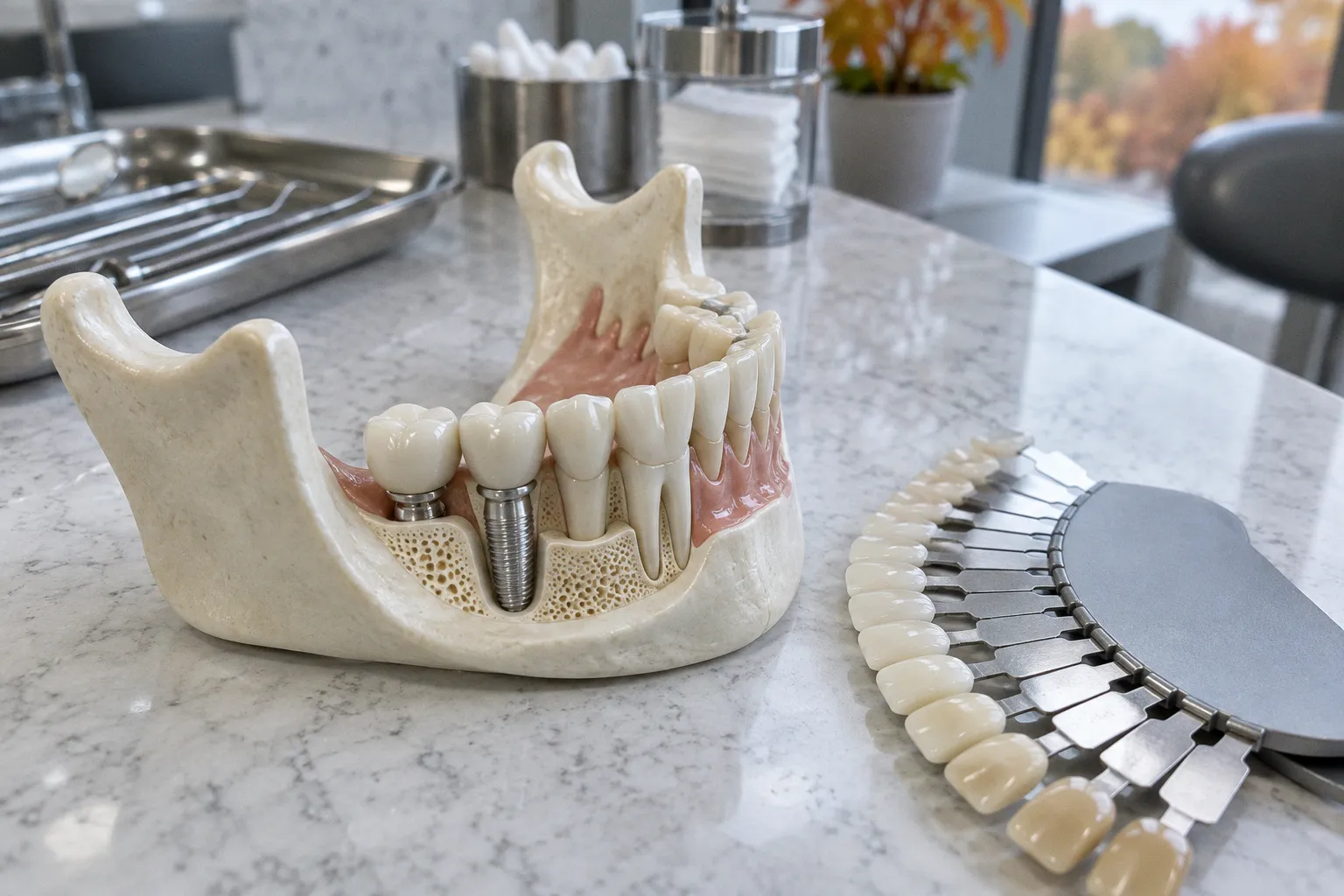
A 3D cone-beam computed tomography scan (CBCT) maps bone height and width, while the medical assessment identifies conditions or medications that can alter bleeding, anesthesia, or healing. Preparation is therefore a clinical protocol, not a single set of instructions that applies to every patient.
The distinction matters before the procedure date. Fasting rules differ between local anesthesia and intravenous sedation or general anesthesia. Blood thinners should not be stopped without instructions from the prescribing clinician. Smoking affects healing and implant integration, but the timing of cessation should be coordinated with the surgical team. The operative plan should resolve these points before the patient arrives.
Clinical diagnostics and anatomical mapping: the role of 3D CBCT imaging
Implant placement requires a defined position within the available jawbone. CBCT imaging provides three-dimensional measurements of bone height and width. These measurements help the clinician assess whether the planned implant can be placed in the intended position or whether bone augmentation or grafting may be required.
A conventional dental image may show structures in two dimensions. CBCT adds cross-sectional views that support assessment of the proposed implant site and nearby anatomy. The scan does not, by itself, determine the final treatment. It is interpreted alongside the oral examination, medical history, and prosthetic plan: the restoration’s position and load-bearing requirements influence where the implant needs to sit.
If imaging indicates insufficient bone volume, the plan may include grafting before or during implant placement. That can change the number of surgical stages and the time to restoration. Osseointegration—the process by which bone bonds to the implant surface—typically takes 3 to 6 months after placement. A grafting procedure may affect the overall schedule; the clinician should explain the sequence for the specific site rather than offer a generic timeline.
Before the appointment, patients can confirm that the treatment plan accounts for:
- The implant site and the intended position of the final crown or other restoration.
- Whether the scan shows adequate bone dimensions or a need for augmentation.
- Whether placement and grafting are planned in one procedure or separate stages.
- The expected interval before the implant is loaded with its definitive restoration.
These are not administrative details. Implant position affects the mechanical relationship between the fixture and the restoration. A plan that considers only the available bone, without the position and function of the intended restoration, is incomplete.
CBCT defines the available anatomy; the restorative plan defines where the implant needs to function.
Managing systemic health: HbA1c and physician clearance
Healing after surgery depends partly on the patient’s systemic health. Diabetes is one relevant factor because elevated blood glucose can interfere with tissue repair. In the preparation guidance summarized here, an HbA1c level above 8% is a threshold for physician clearance before implant surgery. Patients classified as ASA III also require clearance because their medical status may increase the risk of delayed healing or implant failure.
Clearance is not a guarantee of a specific outcome. It is a step in deciding whether the procedure can proceed as planned, whether medical management should be adjusted, or whether timing should change. The dental team needs accurate information about diagnoses, recent laboratory results, and ongoing care. A patient should not rely on an old HbA1c result if the treating clinician requests an updated one.
The medical review should also include conditions beyond diabetes. The relevant question is whether a diagnosis or its treatment changes surgical risk, anesthesia planning, bleeding control, or recovery. The dental clinician may request input from the patient’s physician when the risk profile warrants it.
For a consultation, a practical record set includes:
1. A current medication list, including dose and frequency.
2. A summary of relevant diagnoses and the clinicians managing them.
3. Recent HbA1c information when diabetes is part of the medical history.
4. Details of prior reactions to anesthesia or sedation, if applicable.
5. Contact information for the prescribing clinician when medication coordination may be needed.
Medical clearance for dental implants is especially important when the surgical team identifies a specific risk; it is not a substitute for the dental assessment. The final decision should account for both the implant plan and the patient’s medical status.
Medication and lifestyle adjustments
Blood thinners require individualized planning. Some patients may need a dosage adjustment, but the decision depends on the medication, the reason it was prescribed, and the patient’s overall risk. There is no universal stop date that can safely be applied to all anticoagulants. Do not discontinue or change a prescribed blood thinner unless the prescribing clinician and dental team give direct instructions.
Oral sedatives also affect preparation and transport. For example, a patient taking lorazepam as part of the procedure plan may need a designated driver home. The clinic should explain when the medication is to be taken, what restrictions apply afterward, and who must accompany the patient. Do not take an oral sedative on your own initiative before surgery.
Smoking is a modifiable factor. Stopping 1 to 2 weeks before and after implant placement reduces the risk of implant failure. This is a perioperative interval, not a claim that smoking cessation removes all risk. The surgical team can advise how to manage nicotine use around the procedure and during early healing.
Alcohol should also be avoided before surgery. The exact restriction should be confirmed with the clinic, particularly when sedation or prescribed medication is involved. Patients should disclose alcohol use as part of the medical history rather than assume it is unrelated to anesthesia or recovery.
| Preparation issue | What the patient should do | What requires clinician direction |
|---|---|---|
| Blood thinners | Provide the complete medication name and dose | Any dose change or temporary interruption |
| Oral sedative, including lorazepam | Confirm the written timing instructions and arrange transport | Whether the medication is appropriate and when to take it |
| Smoking | Plan cessation for 1 to 2 weeks before and after placement | Individual advice when cessation or nicotine management is difficult |
| Alcohol | Avoid use before surgery and disclose relevant use | Restrictions tied to anesthesia or prescribed drugs |
This division of responsibility is deliberate. Patients provide accurate information and follow the agreed plan. Clinicians make medication decisions that depend on medical risk. A general internet instruction cannot replace that coordination.
Anesthesia protocols: fasting and transportation
Fasting depends on anesthesia type. It is incorrect to assume that every implant patient must fast. For intravenous sedation or general anesthesia, the stated preoperative fasting window is 6 to 8 hours without food or drink. For local anesthesia alone, a light meal 1 to 2 hours before the appointment may be allowed.
The clinic’s instructions take precedence. The patient should confirm which anesthesia is planned and whether the fasting interval applies to food, liquids, or both under that clinic’s protocol. If the anesthesia plan changes, the preparation instructions may change with it. Do not infer the correct fasting rule from a previous dental procedure.
Transportation is part of anesthesia planning, not a convenience. A patient receiving a sedative may be unable to drive safely afterward and may need a designated driver. Confirm who will take the patient home and whether the clinic requires an escort. Arrange this before the procedure day, rather than after medication has been taken.
A concise preoperative confirmation should establish:
- The planned anesthesia type.
- The start time and applicable fasting window.
- Whether prescribed medication should be taken as usual or handled differently.
- Whether a driver or escort is required.
- The clinic’s contact route if instructions conflict or the patient becomes unwell.
Do not compensate for uncertainty by eating or fasting based on guesswork. Contact the surgical team. Fasting instructions are tied to anesthesia safety and should be followed exactly as provided.
Home recovery setup and post-surgical habits
Recovery preparation begins before surgery. Keep soft, high-protein foods available, such as yogurt, eggs, and protein shakes. These options can make eating more manageable when the surgical site is tender. The clinic may provide additional diet instructions based on the procedure, grafting, or other details of the case.
For the first 48 hours after surgery, avoid rinsing, spitting, and drinking through a straw. These actions can disturb the surgical site and its early clot. Follow the postoperative instructions supplied by the clinician, including any guidance on oral hygiene, pain control, and when to contact the office. If instructions are unclear, obtain clarification rather than improvising.
The recovery area at home should make it possible to rest and follow the treatment plan. Prepare food and any clinician-approved supplies in advance. Make sure prescribed medications can be accessed and that transport is arranged if sedation is used. Do not add over-the-counter medication or supplements without checking for interactions or conflicts with the clinician’s instructions.
Preparation does not end when the implant is placed. Osseointegration commonly takes 3 to 6 months, and the surgical team determines when the implant is ready for the next restorative stage. The interval varies with the treatment plan and clinical findings. A patient should not treat the calendar alone as evidence that the implant is ready to bear the final restoration.
A preparation plan is specific to the procedure
The most reliable pre-surgery plan resolves anatomy, medical risk, medication management, anesthesia, transport, and early recovery before the appointment. The patient’s role is to provide a complete health and medication history, follow the instructions tied to the planned anesthesia, and raise conflicts promptly. The dental and medical teams determine any medication changes and whether clearance is needed.
For implant placement, preparation is clinically viable when it is individualized and coordinated. CBCT supports anatomical planning; medical review addresses systemic risk; and clear anesthesia instructions prevent avoidable errors around fasting and transport. No single checklist can replace those decisions, but confirming each one before surgery makes the procedure plan more controlled and the recovery instructions easier to follow.